


Exploring the Fascinating Life Cycle of Bees and Their Nursery in the Hive
Bees are remarkable creatures that play a crucial role in our ecosystem. Their life cycle is a complex process that unfolds inside the hive, where a carefully maintained nursery nurtures the next generation. Understanding this life cycle reveals how bees grow, develop, and contribute to the hive’s survival. This post takes you inside the hive to explore the stages of a bee’s life and the vital role of the nursery.

The Egg Stage: The Beginning of Life
Every bee’s life starts as a tiny egg laid by the queen. The queen bee can lay up to 2,000 eggs per day during peak season, placing each egg carefully into individual hexagonal cells made of beeswax. These eggs are about the size of a pinhead and stand upright inside the cells.
The egg stage lasts about three days. During this time, the egg develops into a larva. The queen’s ability to lay eggs in a precise pattern ensures the hive’s population grows steadily and maintains its structure.
The Larva Stage: The Nursery in Action
Once the egg hatches, a small, white larva emerges. This stage is the heart of the hive’s nursery. Worker bees feed the larvae a special diet depending on their future role in the hive.
Worker larvae receive a mixture of pollen and nectar called "bee bread."
Queen larvae are fed exclusively with royal jelly, a nutrient-rich secretion that triggers their development into queens.
Larvae grow rapidly, shedding their skin several times. The nursery cells are kept clean and protected by worker bees, who also regulate temperature and humidity to create ideal conditions for growth.
This stage lasts about six days, during which the larva grows to fill the cell.
The Pupa Stage: Transformation Inside the Cell
After the larva reaches full size, worker bees cap the cell with beeswax. Inside this sealed cell, the larva spins a cocoon and enters the pupal stage. This is a period of dramatic transformation, where the larva changes into an adult bee.
During pupation, the bee develops wings, legs, eyes, and other adult features. This stage lasts about 12 days for worker bees, slightly longer for queens and drones.
The hive’s nursery remains a busy place, with many cells sealed at different stages, each housing a developing bee.

The Adult Bee Emerges
When development is complete, the new adult bee chews its way out of the capped cell. The role it takes on depends on its type:
Worker bees perform tasks like cleaning, nursing larvae, foraging, and defending the hive.
Queen bees take on the role of laying eggs and leading the colony.
Drones focus on mating with queens from other hives.
The life span of bees varies: workers live about six weeks during busy seasons, queens can live several years, and drones live only a few months.
The Importance of the Nursery for Hive Health
The nursery inside the hive is essential for the colony’s survival. It provides a safe, controlled environment where young bees develop. Worker bees constantly monitor the nursery, adjusting conditions and feeding larvae to ensure healthy growth.
Any disruption in the nursery, such as disease or poor nutrition, can affect the entire hive. For example, the spread of the Varroa mite, a parasite that attacks bee larvae, has caused significant declines in bee populations worldwide.
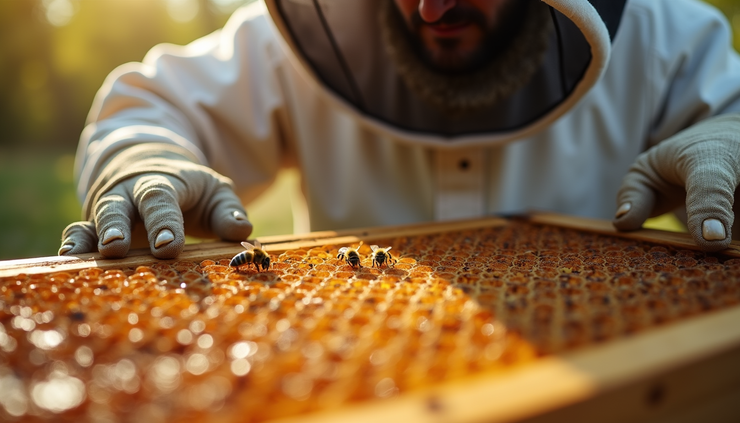
Beekeepers often inspect the nursery area to assess hive health and intervene when necessary. Healthy nurseries lead to strong colonies capable of pollinating crops and producing honey.
Supporting Bees by Understanding Their Life Cycle
Knowing how bees develop inside the hive helps us appreciate their complex social structure and the delicate balance needed for their survival. Protecting the nursery environment means protecting the future of the hive.
You can support bees by:
Planting bee-friendly flowers that provide nectar and pollen.
Avoiding pesticides harmful to bees.
Supporting local beekeepers who maintain healthy hives.
Learning about bee biology to spread awareness.
The life cycle of bees shows how every stage depends on the care and work of the colony. The nursery inside the hive is where life begins and where the future of the hive is shaped.


Comments